
Breaking News
New Abortion Clinic Proposal Sparks Outrage Over “All-Trimester” Abortions in New Jersey
By Hudson County Truth Media | October 2025 Hudson County is once again in the political spotlight — this time over a proposal that could make New…


By Hudson County Truth Media | October 2025
Hudson County is once again in the political spotlight — this time over a proposal that could make New Jersey home to one of the few “all-trimester” abortion clinics in the United States, allowing procedures up until the moment of birth for pregnancies deemed healthy.
Dr. Kristyn Brandi and Nurse Practitioner Catherine Obando announced plans to open Luminosas Wellness Collective by summer 2026, a facility that they claim would offer abortion “care” in all stages of pregnancy. The nonprofit clinic, still pending state licensing, would operate largely on grants and private donations, with organizers already raising roughly $20,000 in grassroots funds.
Brandi and Obando, both outspoken abortion advocates, argue the clinic is necessary because no New Jersey provider currently performs abortions past 28 weeks — despite the state having no legal gestational limit. Their stated goal is to make New Jersey a national hub for the procedure, training others to follow their example.
But to many in Hudson County and across the state, this proposal represents a moral and ethical line crossed. Critics say it turns New Jersey’s reputation as an “abortion safe haven” into something far darker: a place where fully viable unborn children can be terminated just days or even hours before birth.
“Abortion up to birth for healthy babies is not healthcare — it’s barbaric,” said a local resident who contacted Hudson County Truth Media. “There’s a difference between compassion and cruelty, and this crosses it.”
Hudson County’s Political Silence
While national and state media have covered the proposal in favorable terms, Hudson County’s elected officials have remained notably silent. Not one local Democrat has publicly questioned the ethical implications of such late-term abortions, even as many residents express shock at the idea of a clinic that would operate just miles from their neighborhoods.
Some speculate that local leaders’ silence stems from fear of contradicting Governor Phil Murphy and Democratic gubernatorial candidate Mikie Sherrill, both of whom support broad abortion access without gestational limits.
Murphy’s 2022 law codified abortion rights in New Jersey, while Sherrill has called for embedding those rights directly into the state constitution.
Critics say that position effectively opens the door for abortions at any stage, with little oversight and virtually no restrictions.
A Sharp Contrast: Jack Ciattarelli’s Position
Republican gubernatorial candidate Jack Ciattarelli, endorsed by former President Donald Trump, has taken a more balanced approach — defending a woman’s right to choose early in pregnancy but drawing a firm line at 20 weeks, with exceptions for rape, incest, or risks to the mother’s life.
“What I don’t support is making New Jersey the abortion capital of the country,” Ciattarelli said in a recent debate. “I don’t support using taxpayer dollars for it, and I believe parents deserve notification when a minor seeks one.”
Ciattarelli’s campaign has repeatedly criticized Sherrill’s stance as “extreme and out of touch,” pointing out that few nations in the world permit elective abortions as late as New Jersey law currently allows.
The Broader Picture
According to the Centers for Disease Control, abortions after 21 weeks account for about 1% of all procedures nationwide — though that data excludes states like New Jersey, which impose no time limit. These late-term abortions are rare but almost always controversial, especially when involving viable fetuses capable of survival outside the womb.
Advocates for the proposed clinic argue they are filling a gap in care. Critics counter that it’s a disturbing expansion of abortion access that disregards both scientific advances in neonatal viability and basic moral principles.
Medical technology has made it possible for babies born at 24 weeks — or even earlier — to survive and thrive with modern care. Yet, under New Jersey’s current law, those same babies could be legally aborted in the final trimester for non-medical reasons.
Hudson County Residents Deserve a Voice
Hudson County residents deserve transparency and accountability on this issue. If Luminosas Wellness Collective moves forward, it will not only redefine medical practice in New Jersey but also test how far local leaders are willing to go to support a policy that many view as inhumane.
As this debate unfolds, one thing is clear: New Jersey’s political establishment may be comfortable with abortion on demand until birth — but many ordinary citizens are not.
Discover more from Hudson County Truth
Subscribe to get the latest posts sent to your email.
Breaking News
EL DESESPERADO CONTROL DE DAÑOS DE BRIAN STACK: UN JURADO LO DECLARÓ RESPONSABLE, PERO EL ALCALDE TODAVÍA SE NIEGA A ADMITIR QUE SE EQUIVOCÓ
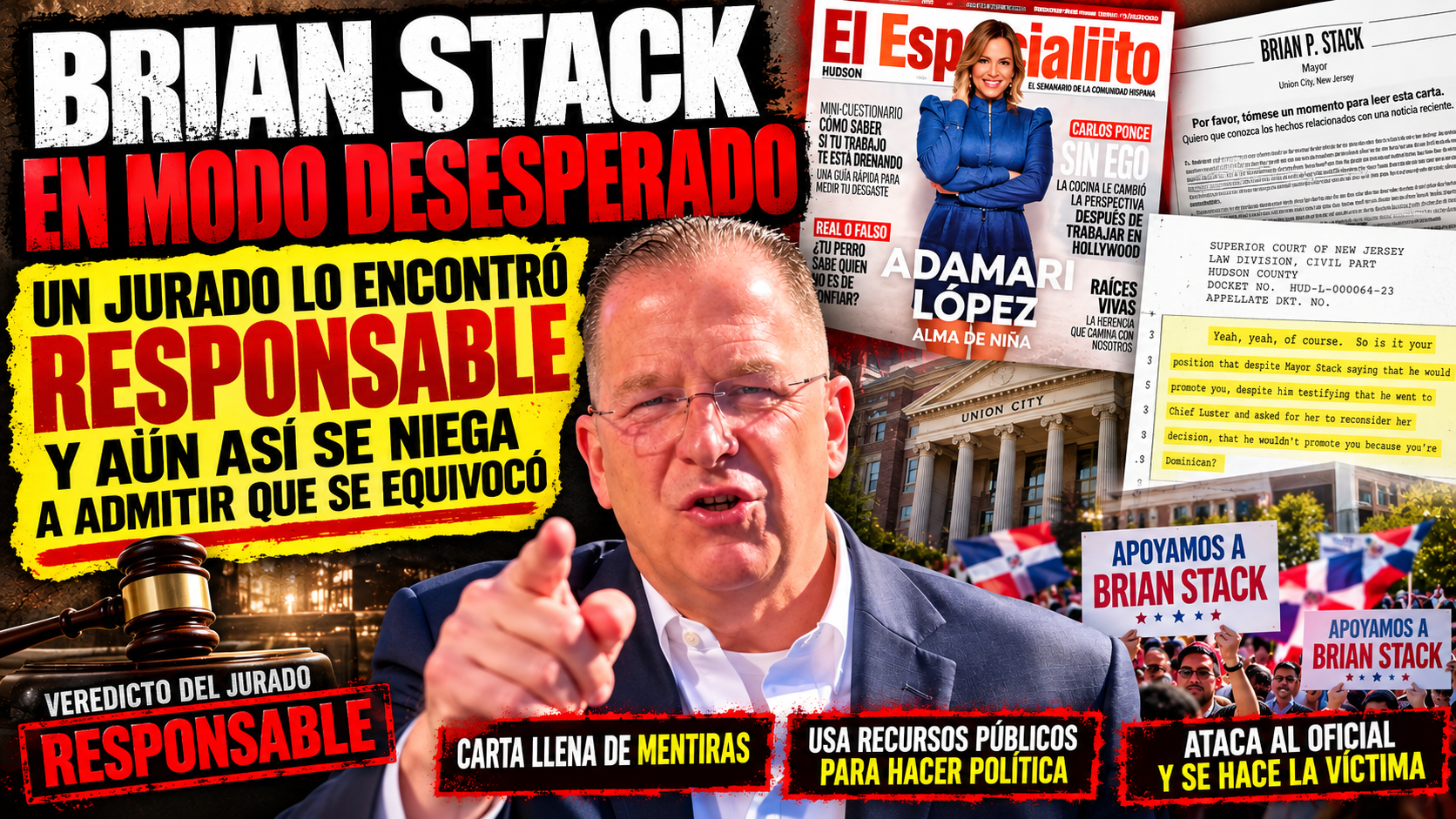
Por John Lang | Hudson County Truth | 8 de octubre de 2026
UNION CITY, NUEVA JERSEY — Después de 26 años como alcalde, Brian P. Stack aparentemente ha perfeccionado una habilidad política: culpar a todos los demás cuando algo sale mal.
Tras la demanda por discriminación presentada por Juan Estrella, en la que ocho miembros del jurado declararon unánimemente a Stack responsable de ayudar y facilitar la discriminación contra un oficial de policía de Union City, el alcalde ha emprendido lo que parece ser una desesperada campaña política para controlar los daños a su imagen.
En lugar de asumir responsabilidad o abordar las conclusiones del jurado, Stack ha recurrido a sus seguidores políticos, declaraciones públicas, cartas enviadas por todo el distrito y un anuncio político pagado de tres páginas en el periódico hispano El Especialito para defenderse.
¿Su mensaje? El oficial está equivocado, sus enemigos políticos son los responsables y, de alguna manera, Brian Stack es la verdadera víctima.
Pero aquí está la pregunta: ¿Alguien ha escuchado alguna vez a Brian Stack admitir que se equivocó en algo?
UN ALCALDE QUE NO PUEDE ACEPTAR EL VEREDICTO DE UN JURADO
El jurado otorgó a Juan Estrella 853,000 dólares en compensación por daños, mientras que la determinación de posibles daños punitivos continúa pendiente.
Sin embargo, la carta de Stack no reconoce ninguna conducta indebida. En cambio, ataca la credibilidad del oficial, cuestiona sus motivos y describe la demanda como una oportunidad para obtener dinero, comparándola con un cajero automático.
Aparentemente, cuando un jurado falla en contra de Brian Stack, el problema no es su conducta. El problema son todos los demás.
Y la propia carta del alcalde plantea más preguntas de las que responde.
Stack afirma que el historial disciplinario de Estrella impidió su ascenso. Sin embargo, la misma transcripción judicial que Stack publicó incluye el testimonio bajo juramento de Estrella, quien declaró que la exjefa de Policía Nichelle Luster no quería que fuera ascendido y que otros supervisores con historiales disciplinarios más graves sí habían recibido ascensos.
¿Por qué destacar el testimonio que favorece su defensa mientras evita abordar el testimonio que la contradice?
Incluso las fechas están equivocadas. La carta de Stack identifica el 6 de septiembre de 2026 como la fecha del testimonio, mientras que la transcripción judicial indica el 1 de septiembre.
Para alguien que preside el Comité Judicial del Senado de Nueva Jersey, la precisión sobre los procedimientos judiciales no debería ser opcional.
SEGUIDORES POLÍTICOS, EMPLEOS GUBERNAMENTALES Y LAS PROPIAS PALABRAS DE STACK
Quizás la declaración más reveladora de la carta de Stack sea su descripción de la familia de Estrella:
“Ellos eran seguidores políticos; ayudé a muchos de ellos con empleos y otros asuntos, como trato de hacer por todos”.
Léanlo otra vez.
Seguidores políticos. Ayuda para conseguir empleos. Todo en la misma oración.
El artículo sostiene que esa declaración demuestra favoritismo político y, ciertamente, plantea preguntas legítimas sobre cómo se distribuyen las oportunidades de empleo público en Union City.
¿Cuántos empleados municipales y de la Junta de Educación son seguidores políticos de Brian Stack? ¿Cuántos fueron contratados estrictamente por sus cualificaciones? ¿Cuántos tienen conexiones políticas?
¿Y qué ocurre con las personas políticamente conectadas que ocupan puestos administrativos bien remunerados, incluido el secretario de la Junta de Educación, Justin Mercado?
Sus cualificaciones, historial de nombramientos y remuneración financiada con fondos públicos merecen ser examinados, no simplemente presumidos.
Los empleos pagados con dinero de los contribuyentes deberían otorgarse por méritos y cualificaciones, no por lealtad política.
Quizás haya llegado el momento de comparar los registros de contribuciones a campañas políticas, las nóminas públicas y los expedientes de contratación gubernamental.
LA EXCUSA ELECTORAL QUE NO TIENE ABSOLUTAMENTE NINGÚN SENTIDO
Stack también sugiere que la demanda tuvo motivaciones políticas debido a su próxima campaña de reelección al Senado.
Pero existe un pequeño detalle inconveniente.
Estrella presentó su demanda el 20 de abril de 2022. Las próximas elecciones de Stack al Senado serán en noviembre de 2027.
¿Se supone que los residentes deben creer que Estrella organizó una demanda con cinco años de anticipación, controló el calendario judicial y consiguió que el jurado emitiera su veredicto en un momento políticamente inconveniente?
¿Cuántas elecciones han ocurrido desde que comenzó esta demanda?
El sistema judicial no funciona de acuerdo con el calendario electoral de Brian Stack.
Su intento de presentar este caso como una conspiración electoral es un insulto a la inteligencia del público.
¿UNA REPENTINA CELEBRACIÓN DE APOYO DOMINICANO?
Después del veredicto, Stack también celebró un evento de la Herencia Hispana que incluyó demostraciones públicas de apoyo político, con pancartas que destacaban su relación con la comunidad dominicana.
No hay absolutamente nada malo en celebrar la herencia hispana o dominicana.
Pero el momento en que se realizó merece ser examinado.
Después de que un jurado declarara a Stack responsable de ayudar y facilitar la discriminación contra un oficial dominicano, las demostraciones públicas de apoyo dominicano repentinamente adquirieron un importante valor político.
¿Fue simplemente una celebración cultural o fue otro intento de reparar su deteriorada imagen política?
Según el artículo, los asistentes parecían ser principalmente empleados de la Junta de Educación y seguidores que habrían recibido instrucciones de asistir, como supuestamente ocurre en otros eventos políticos organizados por Brian Stack.
El momento y los mensajes políticos son imposibles de ignorar.
Tener amigos, familiares y seguidores dominicanos no demuestra que una persona sea incapaz de discriminar contra un empleado dominicano.
Un jurado ya examinó las pruebas y emitió su veredicto.
AHORA SUS CARTAS HAN PROVOCADO OTRA CONTROVERSIA JUDICIAL
El 2 de octubre de 2026, los abogados que representan a Juan Estrella presentaron una solicitud ante el tribunal expresando serias preocupaciones sobre las cartas enviadas masivamente por Stack.
¿El problema?
El jurado todavía permanecía constituido para considerar los daños punitivos mientras Stack distribuía su versión de la demanda por todo el Distrito Legislativo 33.
Los abogados de Estrella solicitaron una investigación para determinar si algún miembro del jurado recibió las cartas y si los abogados de la defensa participaron en su preparación o distribución.
También cuestionaron declaraciones de la carta que calificaron como inexactas o engañosas.
La presentación judicial no demuestra que los jurados hayan estado expuestos a las cartas ni que se haya cometido alguna conducta indebida. Tampoco documenta que se haya emitido una orden judicial para detener su distribución.
Sin embargo, el hecho de que estas cartas provocaran una solicitud formal de investigación judicial es significativo.
Piénsenlo.
En lugar de permitir que los procedimientos judiciales restantes continuaran sin controversias adicionales, los mensajes políticos de Stack se han convertido en otro asunto que se le ha solicitado examinar al juez.
¿En qué momento el control de daños políticos se vuelve más importante para Brian Stack que respetar el proceso judicial?
LOS CONTRIBUYENTES SIGUEN PAGANDO MIENTRAS STACK CONTINÚA DEFENDIÉNDOSE
Stack se queja de que la demanda representa un gasto para los residentes de Union City.
Entonces, quizás debería explicar exactamente cuánto dinero de los contribuyentes se ha gastado defendiendo este caso.
¿Cuánto se ha pagado a abogados externos? ¿Cuánto costará una apelación? ¿Qué parte del veredicto podría terminar pagándose con fondos públicos o seguros? ¿Y cuánto más podrían agregar los procedimientos pendientes relacionados con daños punitivos?
La exposición económica exacta de los contribuyentes todavía debe determinarse mediante registros públicos.
Pero los residentes merecen una explicación completa.
Y ya que estamos hablando de responsabilidad, consideremos cuántos cargos de influencia ocupa Brian Stack.
Alcalde. Director de Seguridad Pública. Senador estatal. Presidente del Comité Judicial del Senado. Líder político de Union City First.
Sin embargo, en su carta defendiéndose de un veredicto por discriminación policial, se identifica simplemente como alcalde.
Convenientemente, el título de Director de Seguridad Pública —el cargo más directamente relacionado con la supervisión del Departamento de Policía— no aparece en el encabezado de la carta.
¿Coincidencia? Quizás. Pero ciertamente merece señalarse.
Tal vez el problema de otorgarle tanta autoridad a un solo político sea que nadie a su alrededor esté dispuesto a decirle cuándo se equivoca.
VEINTISÉIS AÑOS COMO ALCALDE. ¿NI UNA SOLA ADMISIÓN DE ERROR?
Brian Stack tiene todo el derecho legal de impugnar el veredicto y defenderse.
Pero existe una diferencia entre defenderse ante un tribunal y realizar una campaña política para desacreditar a alguien que obtuvo un veredicto favorable de un jurado.
Su carta presenta a sus enemigos políticos como responsables. Sus seguidores se apresuran a defenderlo. Su organización política distribuye sus explicaciones. Y se espera que los residentes acepten que todos los demás están equivocados.
Mientras tanto, el hecho más importante permanece sin cambios:
Ocho miembros del jurado declararon unánimemente a Brian Stack responsable de ayudar y facilitar la discriminación.
Ninguna carta política cambia eso.
Ningún anuncio en un periódico cambia eso.
Ninguna celebración ni respaldo público cambia eso.
Stack puede haber pasado 26 años construyendo una maquinaria política, pero el poder político no convierte a nadie en infalible.
Union City necesita un liderazgo cualificado e independiente, no un sistema en el que una sola persona ocupe múltiples posiciones de autoridad mientras se rodea de lealtad política.
Los residentes deberían exigir transparencia, supervisión independiente, contrataciones públicas justas y una explicación completa de los gastos relacionados con este litigio.
Y deberían guardar cada carta política que Stack envíe. Colóquenlas una al lado de la otra y busquen las palabras que parecen imposibles de pronunciar para él:
“Me equivoqué”.
Stack firmó su carta:
“Tu amigo”.
Bueno, alcalde Stack, los verdaderos amigos se dicen la verdad.
Un jurado lo declaró responsable. Sus seguidores políticos no pueden anular ese veredicto con aplausos. Y los residentes de Union City merecen responsabilidad y rendición de cuentas, no otra excusa.
Veintiséis años como alcalde y, de alguna manera, Brian Stack nunca se equivoca. Qué curioso que los contribuyentes todavía puedan terminar pagando por todas esas ocasiones en las que él insiste que tenía razón.
Comentario editorial basado en el veredicto del jurado de septiembre de 2026 en el caso Estrella, la carta política publicada por Brian Stack, la edición del 2 al 8 de octubre de 2026 de El Especialito y la solicitud judicial del 2 de octubre de 2026 en Juan Estrella contra la Ciudad de Union City, expediente HUD-L-000064-23. Las preguntas sobre favoritismo político, motivaciones electorales y gastos públicos se presentan como asuntos que requieren mayor investigación.
Discover more from Hudson County Truth
Subscribe to get the latest posts sent to your email.
Breaking News
BRIAN STACK’S DESPERATE DAMAGE CONTROL: A JURY FOUND HIM LIABLE, BUT THE MAYOR STILL REFUSES TO ADMIT HE WAS WRONG

UNION CITY, NJ — After 26 years as mayor, Brian P. Stack has apparently mastered one political skill: blaming everyone else when something goes wrong.
Following the Juan Estrella discrimination lawsuit, in which eight jurors unanimously found Stack liable for aiding and abetting discrimination against a Union City police officer, the mayor has launched what appears to be a desperate political damage-control campaign.
Instead of accepting responsibility or addressing the jury’s findings, Stack has relied on political supporters, public statements, districtwide mailings, and a three-page paid advertisement in the Hispanic newspaper El Especialito to defend himself.
His message? The officer is wrong, his political enemies are responsible, and somehow Brian Stack is the real victim.
But here’s the question: Has anyone ever heard Brian Stack admit he was wrong about anything?


A MAYOR WHO CANNOT ACCEPT A JURY’S VERDICT
The jury awarded Juan Estrella $853,000 in compensatory damages, with punitive damages still pending.
Yet Stack’s letter offers no acknowledgment of wrongdoing. Instead, he attacks the officer’s credibility, questions his motives, and describes the lawsuit as a financial opportunity, comparing it to an ATM machine.
Apparently, when a jury rules against Brian Stack, the problem isn’t his conduct. It’s everyone else.
And the mayor’s own letter raises more questions than it answers.
Stack claims Estrella’s disciplinary record prevented his promotion. But the very court transcript Stack published includes Estrella’s sworn testimony that former Police Chief Nichelle Luster did not want him promoted and that other supervisors with more serious disciplinary histories had received promotions.
Why highlight the testimony favorable to your defense while failing to address the testimony that challenges it?
Even the dates are wrong. Stack’s letter identifies September 6, 2026, as the testimony date, while the transcript identifies September 1.
For someone who chairs the New Jersey Senate Judiciary Committee, accuracy about court proceedings should not be optional.
POLITICAL SUPPORTERS, GOVERNMENT JOBS, AND STACK’S OWN WORDS
Perhaps the most revealing statement in Stack’s letter is his description of Estrella’s family:
“They were political supporters – I helped many of them with employment and other matters like I try to do for everyone.”
Read that again.
Political supporters. Employment assistance. All in the same sentence.
That statement alone proves political patronage, and certainly raises legitimate questions about how public employment opportunities are distributed in Union City.
How many municipal employees and Board of Education employees are political supporters of Brian Stack? How many were hired based strictly on qualifications? How many have political connections?
And what about politically connected individuals holding well-paid administrative positions, including Board of Education Secretary Justin Mercado? His qualifications, appointment history, and publicly funded compensation deserve examination, not assumptions.
Taxpayer-funded employment should be based on qualifications, not political loyalty.
Perhaps it is time to compare campaign contribution records, public payrolls, and government hiring records.
THE ELECTION EXCUSE THAT MAKES ABSOLUTELY NO SENSE
Stack also suggests that the lawsuit was politically motivated because of his upcoming Senate reelection.
There’s just one inconvenient fact.
Estrella filed his lawsuit on April 20, 2022. Stack’s next Senate election is November 2027.
Are residents supposed to believe Estrella somehow orchestrated a lawsuit five years in advance, controlled the court calendar, and arranged for a jury verdict to arrive at a politically inconvenient moment?
How many elections have occurred since this lawsuit began?
The court system does not operate according to Brian Stack’s campaign schedule.
His attempt to portray this case as an election conspiracy is an insult to the intelligence of the public.


A SUDDEN CELEBRATION OF DOMINICAN SUPPORT?
Following the verdict, Stack also held a Hispanic Heritage celebration featuring public displays of political support, including signs emphasizing his relationship with the Dominican community.
There is absolutely nothing wrong with celebrating Hispanic or Dominican heritage.
But the timing deserves scrutiny.
After a jury found Stack liable for aiding and abetting discrimination involving a Dominican officer, public demonstrations of Dominican support suddenly became politically valuable.
Was this simply a cultural celebration, or another attempt to repair his damaged political image? Those in attendance of the event appear are mainly Board of Education employees and supporters instructed to attend as they do for every other political event hosted by Brian Stack.
The timing and political messaging are impossible to ignore.
Having Dominican friends, relatives, and supporters does not prove that someone could not have discriminated against a Dominican employee.
A jury already considered the evidence and reached its verdict.
NOW HIS MAILING HAS CREATED ANOTHER COURT CONTROVERSY
On October 2, 2026, attorneys representing Juan Estrella submitted a court application raising serious concerns about Stack’s mass mailing.
The problem?
The jury remained empaneled to consider punitive damages while Stack was distributing his version of the lawsuit throughout the 33rd Legislative District.
Estrella’s attorneys requested an investigation into whether jurors received the mailing and whether defense counsel participated in preparing or distributing it.
They also challenged statements in the letter that they characterized as inaccurate or misleading.
The filing does not establish that jurors were exposed or that misconduct occurred, and it does not document an issued cease-and-desist order. But the fact that the mailing prompted a formal request for judicial inquiry is significant.
Think about that.
Instead of allowing the remaining court proceedings to unfold without controversy, Stack’s political messaging has become another issue the judge has been asked to examine.
At what point does political damage control become more important to Brian Stack than respecting the judicial process?
THE TAXPAYERS KEEP PAYING WHILE STACK KEEPS DEFENDING HIMSELF
Stack complains that the lawsuit comes at the expense of Union City residents.
Then perhaps he should explain exactly how much taxpayer money has been spent defending this case.
How much has gone to outside attorneys? How much will an appeal cost? What portion of the verdict could ultimately be paid with public funds or insurance? And how much more could the pending punitive-damages proceedings add?
The exact taxpayer exposure remains to be established through public records.
But residents deserve a full accounting.
And while we’re discussing accountability, consider how many positions of influence Brian Stack holds.
Mayor. Public Safety Director. State Senator. Senate Judiciary Committee Chairman. Political leader of Union City First.
Yet in his letter defending himself against a police discrimination verdict, he identifies himself simply as mayor.
Conveniently, the Public Safety Director title—the position most directly connected to police department oversight—is nowhere in the letter’s heading.
Coincidence? Perhaps. But it is certainly worth pointing out.
Maybe the problem with giving one politician so much authority is that nobody around him is willing to tell him when he’s wrong.
TWENTY-SIX YEARS AS MAYOR. NOT ONE ADMISSION OF ERROR?
Brian Stack has every legal right to challenge the verdict and defend himself.
But there is a difference between defending yourself in court and conducting a political campaign to discredit someone who prevailed before a jury.
His letter portrays political enemies as responsible. His supporters rush to defend him. His political organization distributes his explanation. And residents are asked to accept that everyone else is mistaken.
Meanwhile, the most important fact remains unchanged:
Eight jurors unanimously found Brian Stack liable for aiding and abetting discrimination.
No political mailing changes that.
No newspaper advertisement changes that.
No celebration or public endorsement changes that.
Stack may have spent 26 years building a political machine, but political power does not make someone infallible.
Union City needs qualified, independent leadership—not a system where one individual holds multiple positions of authority while surrounding himself with political loyalty.
Residents should demand transparency, independent oversight, fair public hiring, and a complete accounting of this litigation.
And they should save every political letter Stack sends. Put them side by side and look for the words that seem impossible for him to say:
“I was wrong.”
Stack signed his letter, “Your Friend.”
Well, Mayor Stack, real friends tell each other the truth.
A jury found you liable. Your political supporters cannot overturn that verdict with applause. And the people of Union City deserve accountability—not another excuse.
Twenty-six years as mayor, and somehow Brian Stack is never wrong. Funny how the taxpayers may still end up paying for the times he insists he was right.
⸻
Editorial commentary based on the September 2026 Estrella jury verdict, Brian Stack’s published political letter, the October 2–8, 2026 edition of El Especialito, and the October 2, 2026 court application in Juan Estrella v. City of Union City, Docket No. HUD-L-000064-23. Questions concerning political patronage, campaign motives, and public expenditures are presented as matters requiring further investigation
Discover more from Hudson County Truth
Subscribe to get the latest posts sent to your email.
HUDSON COUNTY TRUTH | POLITICAL EDITORIAL
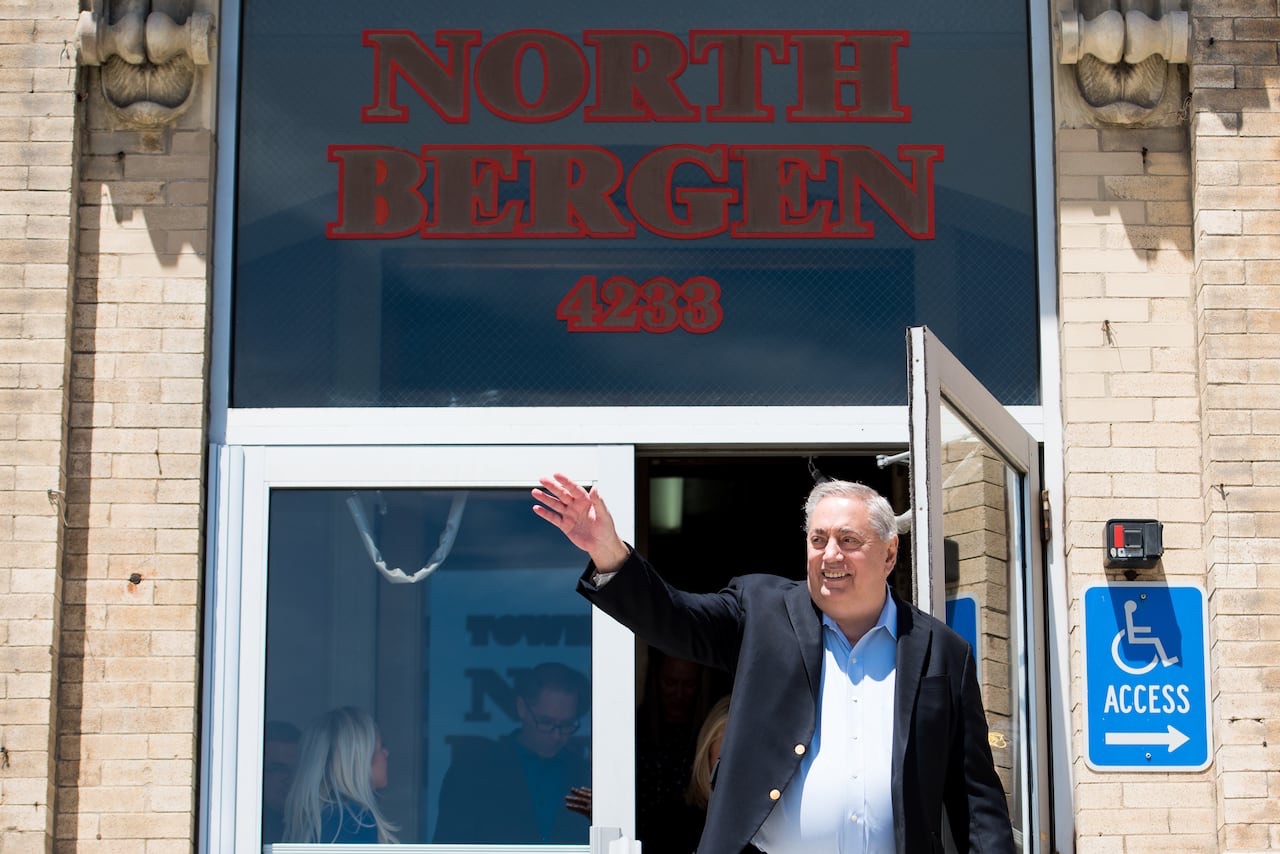
NORTH BERGEN, NJ — After 35 years as mayor of North Bergen, Nicholas J. Sacco is reportedly preparing to step away from the office he has held since 1991, closing an extraordinary chapter in Hudson County’s political history.
According to the New Jersey Globe, Sacco is expected to announce his resignation, marking the conclusion of a mayoral career that has spanned generations.
For the people of North Bergen, Nicholas Sacco represents more than a politician. He represents continuity, community identity, decades of public service, and a lifelong commitment to the township he helped lead.
While political opponents have attempted to diminish his influence, there is one thing they cannot erase: Nicholas Sacco’s place in North Bergen history.
A Lifetime Dedicated to North Bergen
Nicholas Sacco’s political career began long before many of today’s political figures established themselves in Hudson County.
First elected township commissioner in 1985, Sacco became mayor in 1991 and went on to serve approximately three decades in the New Jersey State Senate.
His career in education, municipal government, and state government reflects an extraordinary commitment to public service.
Under his leadership, North Bergen has emphasized neighborhood improvements, recreation, rent control, public safety, and municipal services.
His repeated electoral victories also demonstrate the longstanding political support he earned from North Bergen residents.
Sacco’s legacy is not defined by a single election or political confrontation. It is defined by decades of leadership and the community he served.
Brian Stack’s Political Ambitions Cannot Rewrite History
The contrast between Nicholas Sacco’s longstanding public service and Brian Stack’s increasingly aggressive political competition is impossible to ignore.
Stack, who serves as both Union City mayor and a state senator, has steadily expanded his political influence across Hudson County.
Following legislative redistricting, Sacco and Stack found themselves in the same Senate district. Sacco ultimately chose not to seek another Senate term in 2023.
Their political rivalry continued, including the 2025 Democratic Assembly primary, when candidates backed by Stack defeated candidates supported by Sacco.
But winning political contests does not automatically make someone a better public servant.
Political power is not the same as political greatness.
Stack’s ability to build political alliances and win elections may demonstrate political strength. It does not, by itself, establish superior leadership, greater accountability, or a more meaningful legacy.
Hudson County residents should ask whether the constant pursuit of political influence serves their interests or simply strengthens the politicians who already hold power.
When Political Rivalries Affect Public Services
One of the most troubling examples of the deteriorating relationship between North Bergen and Union City involved North Hudson Regional Fire & Rescue.
In October 2024, North Bergen announced plans to leave the regional fire service. Sacco publicly connected the decision to tensions involving Stack.
The dispute raised serious questions about what happens when political relationships deteriorate between neighboring municipalities.
Emergency services, public safety, and taxpayer resources should never become bargaining chips in political confrontations.
Brian Stack should be expected to explain how his political approach promotes regional cooperation and serves residents beyond his own political organization.
The public deserves leadership focused on cooperation rather than endless battles for political advantage.
Sacco’s Legacy Belongs to North Bergen, Not Brian Stack
As Sacco prepares to leave office, some may attempt to portray his departure as another example of Stack’s growing political dominance.
Such a narrative would be an insult to the decades of service Sacco has devoted to North Bergen.
Nicholas Sacco was elected mayor long before the current political rivalry reached its height. He built a career that cannot be measured solely against Brian Stack’s political ambitions.
His legacy belongs to the generations of North Bergen residents who lived under his administration, supported his leadership, and witnessed the township’s development.
It does not belong to the political opponents who sought to defeat him.
The Difference Between Holding Power and Leaving a Legacy
Brian Stack may continue to accumulate political influence, but Hudson County residents have every right to question the concentration of power in the hands of elected officials who hold multiple influential positions.
Political dominance should never be mistaken for public accountability.
An elected official’s success should ultimately be measured by the quality of government, the protection of public services, respect for residents, and willingness to place the public interest above political rivalry.
Nicholas Sacco’s 35-year mayoral tenure stands as a remarkable achievement in New Jersey municipal government.
His anticipated departure deserves recognition, gratitude, and respect.
Hudson County Truth’s Final Word
Nicholas Sacco leaves behind a legacy that extends far beyond political organizations, election campaigns, and rivalries.
His decades of service to North Bergen cannot be erased by Brian Stack, by changing political alliances, or by the outcome of any single election.
Brian Stack may have won recent political battles, but that does not give him ownership of North Bergen’s history or the accomplishments of its longtime mayor.
Nicholas Sacco spent 35 years serving as mayor of North Bergen. Brian Stack cannot rewrite those 35 years simply by winning political contests.
The people of North Bergen will remember Nicholas Sacco for the role he played in their community.
And while political power may change hands, history cannot be rewritten to satisfy the ambitions of a political rival.
Thank you, Mayor Nicholas Sacco, for your decades of public service. Your place in North Bergen’s history is secure.
Discover more from Hudson County Truth
Subscribe to get the latest posts sent to your email.


EL DESESPERADO CONTROL DE DAÑOS DE BRIAN STACK: UN JURADO LO DECLARÓ RESPONSABLE, PERO EL ALCALDE TODAVÍA SE NIEGA A ADMITIR QUE SE EQUIVOCÓ

BRIAN STACK’S DESPERATE DAMAGE CONTROL: A JURY FOUND HIM LIABLE, BUT THE MAYOR STILL REFUSES TO ADMIT HE WAS WRONG

The End of an Era: Nicholas Sacco’s 35-Year Legacy in North Bergen

Jimmy Davis Can’t Run From the Truth: The People Deserve to Know Who He Really Is

A Closer Look at Jamie Chebra: Former Jersey City EMS Leader’s Past and Present Under Scrutiny

BREAKING: Scandal Erupts Inside Hudson County Sheriff’s Office — Lt. Fedrow Found Guilty of Sexual Misconduct, County Officials Accused of Political Protection

-
 Breaking News1 year ago
Jimmy Davis Can’t Run From the Truth: The People Deserve to Know Who He Really Is
-
 Breaking News1 year ago
A Closer Look at Jamie Chebra: Former Jersey City EMS Leader’s Past and Present Under Scrutiny
-
 Breaking News12 months ago
BREAKING: Scandal Erupts Inside Hudson County Sheriff’s Office — Lt. Fedrow Found Guilty of Sexual Misconduct, County Officials Accused of Political Protection
-
 Breaking News2 years ago
UNION CITY POLICE OFFICER FERNANDO MURO IS FAMOUS!
-
 Breaking News2 years ago
🔥🚔 BREAKING: UNION CITY POLICE CHIEF ANTHONY FACCHINI IS A DISGRACE! OFFICERS WANT HIM GONE IMMEDIATELY! 🚔🔥
-
 Breaking News2 years ago
A History Lesson of Corruption in Union City
-
 Breaking News2 years ago
Republican Assembly Candidate Condemns Brian Stack Letter, Calls for Term Limits
-
 Breaking News1 year ago
📰 BREAKING: Barbara Pinzon Ousted in Union City Teachers Union Shake-Up – Juana Dominguez and Daniel Prusko Elected in Historic Shift Towards Transparency and Reform