
Breaking News
THE HUDSON COUNTY SHERIFF’S OFFICE: It’s History
In Hudson County, the history of the sheriff’s office reflects not only law-enforcement evolution, but also the county’s deep political traditions,…


A Century-and-a-Half of Law, Politics, Controversy, and Public Service (1872-2026)
Since the late 19th century, the office of Sheriff in Hudson County has remained one of the most enduring and visible institutions in local government. Rooted in a law-enforcement tradition that traces its origins back more than a thousand years to English and Scottish legal systems, the sheriff’s role evolved in the United States into a constitutionally recognized county office responsible for courts, civil process, corrections-related duties, and broader public safety functions.
In Hudson County, the history of the sheriff’s office reflects not only law-enforcement evolution, but also the county’s deep political traditions, power struggles, controversies, and institutional reforms that have shaped its governance for generations.
The Early Years: Foundations, Patronage, and Machine Politics (1872-1905)
The documented modern record begins with Jacob Reinhardt (1872-1875), followed by Patrick Lafferty (1875-1878) and John J. Toffey (1878-1881). These early administrations operated during rapid industrialization and population growth across Jersey City, Hoboken, and surrounding municipalities.
Hudson County politics during this era became increasingly dominated by organized political machines. The environment in which sheriff’s deputies and local political figures operated was often marked by election fraud allegations, patronage networks, and ward-level power struggles, a pattern seen across Hudson County political history during the late 19th and early 20th centuries.
Leadership continued under Cornelius Cronin (1881-1884), Ferdinar Heintz (1884-1887), Robert Dorus (1887-1890), John McPhilips (1890-1892), Edward Stanton (1892-1893), and John J. Toffy (1893-1896). Transitional leadership in 1899 included Alex McLean and Carl Ruempler, illustrating the instability and political maneuvering common in county offices of the period.
Consolidation and Political Influence (1902-1935)
Entering the 20th century, sheriffs such as John Zeller (1902-1905) and John Kaiser (1905-1908) served amid increasingly centralized political control. Hudson County’s governing structure — particularly the dominance of party organizations — influenced sheriff elections and operational priorities.
Subsequent administrations included James J. Kelly (1908-1911), Peter Wedin (1911-1914), Eugene Kinkead (1914-1917), and John Magner (1917-1920). Their tenures spanned major national crises such as World War I and Prohibition, periods that dramatically altered enforcement responsibilities.
Leadership continued through the Depression era with Thomas Madigan (1920-1923), John Hannan (1923-1926), John J. Coppinger (1926-1929), William V. O’Driscoll (1929-1932), and Joseph Colford (1932-1935).
Mid-Century Transformation and Institutional Stability (1935-1972)
Sheriffs including Hugh F. Parle (1935-1938), Joseph J. McGurk (1938-1939), Eugene Ertle (1939-1942), and William J. McGovern (1942-1945) led the office through World War II and its aftermath.
Post-war leadership under Thomas J. Fleming (1945-1951) and William J. Kelly Jr. (1951-1954) coincided with suburban expansion and modernization of law-enforcement practices.
The mid-century period also included Philip A. Healy (1954), William J. Flanagan (1954-1962), and George M. Bonelli (1962-1972). During this era, Hudson County’s broader political structure remained heavily influenced by party organizations, contributing to one-party dominance in countywide offices that would last for decades.
A brief transitional period in 1972 saw James Deevey serve before William J. Wolfe (1972-1974) assumed office.
Modernization and Professionalization — with Political Undercurrents (1975-2011)
The late 20th century brought operational modernization beginning with Frederick M. Stevens (1975-1977) and John P. Gillen (1977-1981).
Leadership continued with Peter DiNardo (1981-1983), Dominick Pugliese (1983-1986), and Edward Webster (1986-1995).
During this broader period, Hudson County government itself became the subject of high-profile corruption investigations, most notably involving county leadership outside the sheriff’s office. Former county executive Robert Janiszewski later pleaded guilty to accepting bribes and cooperated in a federal corruption probe, illustrating the intense scrutiny surrounding county governance structures in which the sheriff’s office operated.
The office entered a lengthy modern administrative phase under Joseph T. Cassidy (1995-2008), followed by Juan Perez (2008-2011).
Contemporary Era: Conflict, Reform, and Political Realignment (2011-2026)
The modern era of the Hudson County Sheriff’s Office was defined by the extended tenure of Frank X. Schillari (2011-2025). His administration saw expanded court security operations, regional policing initiatives, and increased interagency cooperation.
However, Schillari’s tenure also intersected with several controversies and political conflicts:
– In 2018, the department drew public attention after a recruit was terminated for failing to disclose prior involvement in adult-entertainment work, a disciplinary matter that generated widespread media coverage.
– Budget disputes emerged between the sheriff’s office and county leadership, with county officials criticizing transparency in staffing and overtime spending while the sheriff’s office disputed funding claims.
– His final re-election campaign became a highly contentious political battle involving public accusations and disputes over campaign messaging.
A tragic incident also shook the department in May 2025 when a sheriff’s officer died after falling from a county building while on duty, prompting an investigation and drawing public attention to workplace conditions and officer welfare.
Historic Political Shift
Perhaps the most significant political development in the office’s modern history occurred during Schillari’s final months in office. After losing the Democratic primary for sheriff in 2025, he switched his party affiliation to Republican, ending a century-long tradition of uninterrupted Democratic control of the sheriff’s office.
This shift represented one of the most notable political realignments in Hudson County constitutional offices in modern times.
The Present Administration and Continuing Legacy
Following the 2025 election, James M. “Jimmy” Davis (2026-present) assumed office as the county’s 55th sheriff, marking the latest chapter in an institution shaped by more than 150 years of leadership transitions, political conflict, institutional reform, and evolving public-safety responsibilities.
Sheriff Davis brings his own controversies during his tenure as Mayor of Bayonne involving sexting and sexual harassment allegations. Currently the Sheriff is accused of political retaliation against civilian county employees and sheriff officers who did not politically support his campaign for sheriff.
A Continuing Institutional Legacy
From the political patronage systems of the late 1800s to the professional law-enforcement structures of today, the Hudson County Sheriff’s Office reflects the broader evolution of local government in one of New Jersey’s most densely populated and historically significant counties.
The documented succession of sheriffs from 1872 through 2026 illustrates not only changes in leadership but also the enduring importance of the office in maintaining public order, supporting the judiciary, and adapting to the shifting needs of Hudson County residents.
As the office moves forward under current leadership, its history serves as a reminder that local institutions — shaped by decades of public service, political change, and community demands — remain central to the functioning of county government.
Jacob Reinhardt — 1872–1875 — Republican
Patrick Lafferty — 1875–1878 — Democrat
John J. Toffey — 1878–1881 — Republican
Cornelius Cronin — 1881–1884 — Democrat
Ferdinar Heintz — 1884–1887 — Republican
Robert Dorus — 1887–1890 — Democrat
John McPhilips — 1890–1892 — Democrat
Edward Stanton — 1892–1893 — Democrat
John J. Toffy — 1893–1896 — Republican
Alex McLean — 1899–1899 — Democrat
Carl Ruempler — 1899–1902 — Democrat
John Zeller — 1902–1905 — Democrat
John Kaiser — 1905–1908 — Republican
James J. Kelly — 1908–1911 — Democrat
Peter Wedin — 1911–1914 — Democrat
Eugene Kinkead — 1914–1917 — Democrat
John Magner — 1917–1920 — Democrat
Thomas Madigan — 1920–1923 — Democrat
John Hannan — 1923–1926 — Democrat
John J. Coppinger — 1926–1929 — Democrat
William V. O’Driscoll — 1929–1932 — Democrat
Joseph Colford — 1932–1935 — Democrat
Hugh F. Parle — 1935–1938 — Democrat
Joseph J. McGurk — 1938–1939 — Democrat
Eugene Ertle — 1939–1942 — Democrat
William J. McGovern — 1942–1945 — Democrat
Thomas J. Fleming — 1945–1951 — Democrat
William J. Kelly Jr. — 1951–1954 — Democrat
Philip A. Healy — 1954–1954 — Democrat
William J. Flanagan — 1954–1962 — Democrat
George M. Bonelli — 1962–1972 — Democrat
James Deevey — 1972–1972 — Democrat
William J. Wolfe — 1972–1974 — Democrat
Frederick M. Stevens — 1975–1977 — Democrat
John P. Gillen — 1977–1981 — Democrat
Peter Dinardo — 1981–1983 — Democrat
Dominick Pugliese — 1983–1986 — Democrat
Edward Webster — 1986–1995 — Democrat
Joseph T. Cassidy — 1995–2008 — Democrat
Juan Perez — 2008–2011 — Democrat
Frank X. Schillari — 2011–2025 — Democrat/Republican
James M. Davis — 2026–Current — Democrat
Discover more from Hudson County Truth
Subscribe to get the latest posts sent to your email.

El oficial David Tafur declara en el juicio de Juan Estrella contra Union City
El juicio de Juan Estrella contra la Ciudad de Union City está levantando serias preguntas sobre discriminación, disciplina y liderazgo dentro del Departamento de Policía.
Y la jueza Kalimah Ahmad tomó la decisión correcta al permitir que el oficial David Tafur testificara ante el jurado.
Ahora el jurado pudo escuchar directamente al hombre que dice haber escuchado personalmente una declaración muy preocupante de la exjefa de Policía Nichelle Luster.
“YO SÉ LO QUE ESCUCHÉ”
Anteriormente, Estrella había declarado que Tafur le contó que Luster supuestamente había comparado a los dominicanos con “animales” durante un Desfile Dominicano en Union City.
Pero ahora Tafur mismo subió al estrado y declaró bajo juramento.
Según Hudson County View, Tafur dijo que estaba aproximadamente a cinco pies de Luster cuando escuchó el comentario.
Tafur fue claro:
“Yo sé lo que escuché.”
También explicó que no lo reportó en ese momento porque era joven y tenía miedo de poner en peligro su trabajo.
Estas acusaciones son extremadamente serias.
Cualquier comentario degradante contra los dominicanos debe ser condenado.
Ningún jefe de Policía, funcionario público o empleado del gobierno debe hablar de esa manera sobre la comunidad que tiene la responsabilidad de servir.
¿POR QUÉ IMPORTA TANTO EL TESTIMONIO DE TAFUR?
Tafur también habló sobre cómo él y Estrella fueron disciplinados después de participar en el mismo incidente.
Según su testimonio, Tafur recibió una reprimenda verbal mientras que Estrella recibió una suspensión.
Tafur es colombiano.
Estrella es dominicano.
Y Tafur dijo algo muy importante sobre lo que hicieron ambos oficiales:
“Él no hizo nada diferente.”
Entonces la pregunta es sencilla:
¿Por qué dos oficiales involucrados en el mismo incidente recibieron castigos diferentes?
Eso es precisamente parte de lo que Estrella está alegando en este caso: que recibió un trato diferente por ser dominicano.
Union City niega las acusaciones y argumenta que el historial disciplinario de Estrella justificó las diferencias en disciplina y en las decisiones de promoción.
Ahora será el jurado quien decida..
UNION CITY SIGUE HABLANDO DEL HISTORIAL DE ESTRELLA
El abogado defensor de Union City, Phillip Morrow, ha cuestionado repetidamente a Estrella sobre sus problemas disciplinarios anteriores y los acuerdos que firmó.
La Ciudad tiene derecho a presentar esa defensa.
Pero existe otra pregunta que el historial disciplinario de Estrella simplemente no puede contestar:
¿Dijo o no dijo la futura jefa de Policía esas palabras sobre los dominicanos?
El historial disciplinario de Estrella no determina lo que Tafur escuchó.
Tafur declaró que estaba allí.
Declaró que escuchó personalmente el comentario.
Y lo hizo bajo juramento y frente al jurado.
¿Y QUÉ PASA CON EL ALCALDE BRIAN STACK?
El alcalde Brian Stack también es acusado en este caso y ha servido como Director de Seguridad Pública de Union City.
Según testimonios anteriores reportados durante el juicio, Stack indicó que dependía de las recomendaciones del jefe de Policía para las promociones.
Luster, por su parte, declaró que Stack tenía la autoridad final para decidir las promociones y que ella hacía recomendaciones.
Entonces los residentes tienen derecho a preguntar:
¿Quién era realmente responsable?
Si la jefa recomendaba a quién promover y el Director de Seguridad Pública seguía esas recomendaciones, ¿qué tipo de revisión independiente realmente existía?
Estas son preguntas legítimas que los residentes de Union City merecen ver contestadas.
LA JUEZA HIZO BIEN EN PERMITIR ESTE TESTIMONIO
La decisión de la jueza Ahmad permitió que el jurado escuchara directamente a Tafur.
Eso era importante.
No se trata simplemente de Estrella diciendo lo que otra persona supuestamente le contó.
Tafur apareció personalmente.
Juró decir la verdad.
Fue interrogado por ambas partes.
HABLA LA ABOGADA DE ESTRELLA
Cuando la abogada Yasmin Estrella salía del tribunal después del testimonio del oficial David Tafur, dio una declaración a los medios:
“Esperamos que el jurado haya visto lo que debió haberse visto hace mucho tiempo. Como testificó hoy el oficial Tafur, la verdad tenía que decirse, y hoy se dijo en el tribunal y el jurado la escuchó.”
Los medios le preguntaron a la abogada de Estrella:
“¿Qué fue lo que dijo?”
La abogada respondió:
“‘Estos dominicanos son animales.’ Esto es lo que… la jefa Luster… esto es lo que la exjefa de Policía de Union City piensa sobre los dominicanos. Espero que la gente de Union City esté prestando atención a este juicio.”
UNION CITY DEBE PRESTAR ATENCIÓN
Este caso ya no se trata solamente de una promoción a sargento.
Se están haciendo preguntas serias sobre discriminación, disciplina, promociones y liderazgo dentro del Departamento de Policía de Union City.
Un oficial actual de Union City declaró bajo juramento que una mujer que posteriormente llegó a convertirse en jefa de Policía hizo un comentario degradante sobre los dominicanos.
Eso merece atención.
La comunidad dominicana es una parte fundamental de Union City y del Condado de Hudson.
Nadie debe ser tratado como inferior por su nacionalidad.
Y hablar una y otra vez del historial disciplinario de Juan Estrella no hace desaparecer el testimonio de David Tafur.
La Ciudad tiene derecho a defenderse.
Los abogados tienen derecho a cuestionar a los testigos.
Pero los residentes también tienen derecho a exigir respuestas de Nichelle Luster, Brian Stack, el Departamento de Policía y la Ciudad de Union City.
Todavía no existe un veredicto final.
Pero ahora existe una diferencia muy importante:
Juan Estrella ya no es simplemente quien dice lo que Tafur le contó.
David Tafur llegó al tribunal.
Subió al estrado.
Declaró bajo juramento.
Y frente al jurado dijo:
“YO SÉ LO QUE ESCUCHÉ.”
Ahora le corresponde al jurado decidir.
Discover more from Hudson County Truth
Subscribe to get the latest posts sent to your email.
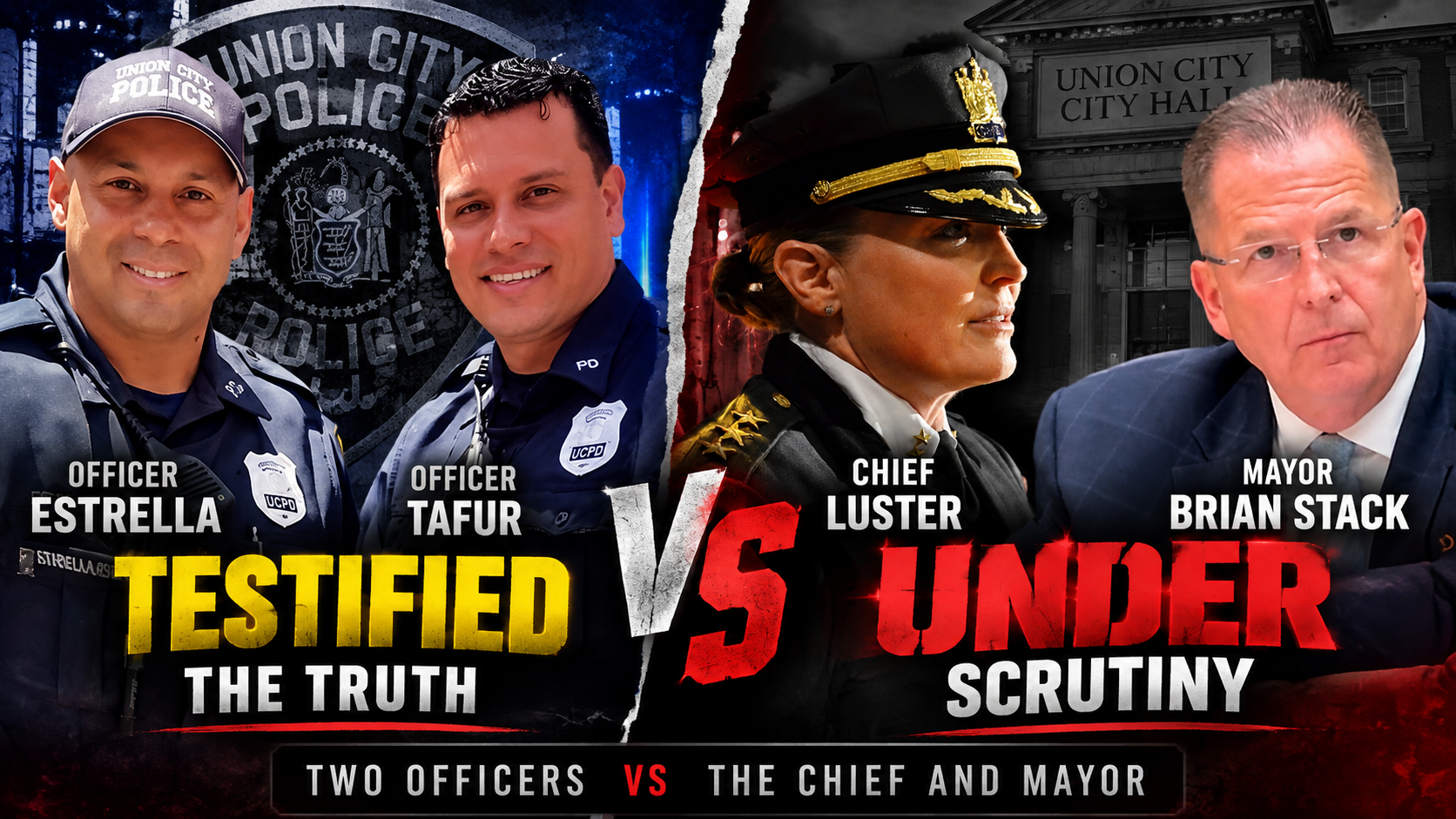
Officer David Tafur takes the stand in Juan Estrella’s discrimination trial
The discrimination trial of retired Union City Police Officer Juan Estrella against the City of Union City and other defendants has produced some of its most serious testimony yet.
And Superior Court Judge Kalimah Ahmad made the right decision by allowing current Union City Police Officer David Tafur to testify before the jury.
Before Tafur appeared before the jury, Judge Ahmad conducted an evidentiary hearing concerning proposed testimony from Tafur and another officer. She ultimately permitted Tafur to testify while excluding the other officer’s proposed testimony.
That ruling allowed jurors to hear Tafur’s account directly rather than simply hearing what Estrella said Tafur had previously told him.
“I KNOW WHAT I HEARD”
Earlier in the trial, Estrella testified that Tafur told him that former Union City Police Chief Nichelle Luster had referred to Dominicans as “animals” at a Dominican Day Parade.
Then Tafur himself took the witness stand.
According to Hudson County View’s reporting, Tafur testified under oath that he was approximately five feet away from Luster at a Dominican Day Parade before the COVID-19 pandemic when he heard her equate Dominicans with “animals.”
Tafur stood by his recollection:
“I know what I heard.”
He testified that the parade had not yet begun, making it possible for him to hear the remark. He also explained why he did not report it at the time: He was young and did not want to jeopardize his career.
Tafur further testified that hearing such a remark made him wonder what was being said about other Hispanics.
The allegation is disturbing.
If a jury ultimately finds that a person who rose to become Union City’s chief of police made such a statement, Union City residents deserve answers about how someone holding those views could have reached the highest position in their Police Department.
No community—Dominican or otherwise—should be spoken about that way by a public official entrusted with authority over its residents.
THE DISCIPLINE QUESTION JUST GOT BIGGER
Tafur’s testimony was not limited to Luster’s alleged remark.
He also testified about an incident that involved both himself and Estrella.
According to Tafur, the two officers handled the same incident involving a woman who alleged racial bias after receiving a parking ticket. Tafur testified that he received an oral reprimand while Estrella was suspended.
Tafur is Colombian. Estrella is Dominican.
And Tafur told the jury about their conduct:
“He didn’t do anything different.”
That testimony goes directly to an important question raised by Estrella’s case: Was discipline applied consistently?
Estrella contends that his disciplinary history was used against him to deny him promotion to sergeant while non-Dominican officers were treated differently.
Union City disputes that allegation. The defense maintains that Estrella’s disciplinary record legitimately distinguished him from other officers and has argued that progressive discipline explains why Tafur and Estrella received different penalties.
That is precisely why Tafur’s testimony matters. The jury now has a firsthand witness who participated in one of the incidents being used to compare the treatment of the two officers.
UNION CITY KEEPS RETURNING TO ESTRELLA’S DISCIPLINE
Union City’s defense attorney, Phillip Morrow, has repeatedly examined Estrella’s disciplinary history and settlement agreements.
The defense is entitled to present that evidence, particularly because Union City maintains that discipline—not Estrella’s Dominican national origin—explains why he was bypassed for promotion.
But disciplinary history does not answer a separate and deeply troubling question raised by Tafur’s testimony:
Did the future chief of the Union City Police Department actually make the alleged remark about Dominicans?
Whether Estrella had previous discipline cannot determine whether Tafur heard what he says he heard.
And Tafur did not merely repeat a rumor on the witness stand.
According to the reporting, he testified that he was there, approximately five feet away, and personally heard the remark.
That testimony now belongs before the jury alongside the defense’s evidence.
MAYOR BRIAN STACK ALSO HAS QUESTIONS TO ANSWER
Mayor Brian Stack is not merely a spectator in this case. He is a named defendant and also served as Union City’s Director of Public Safety.
Stack previously testified that he relied upon the police chief’s recommendations concerning promotions.
When questioned about what independent review he conducted concerning Estrella, Stack repeatedly emphasized that he followed the chief’s recommendation.
Luster, meanwhile, testified that Stack was ultimately the authority who decided promotions and that she made recommendations.
That creates an obvious question for Union City residents:
Who was actually accountable for making sure promotion decisions were fair?
If the chief made the recommendation and the Public Safety Director routinely followed it, residents have every right to scrutinize how meaningful the oversight really was.
THIS IS WHY TAFUR NEEDED TO TESTIFY
Judge Ahmad’s decision allowed the jury to hear evidence directly from the person who says he witnessed the alleged remark.
That is exactly where this evidence belongs: in the courtroom, under oath, subject to cross-examination and evaluated by the jury.
Tafur was questioned by both sides.
The defense challenged his credibility and brought up that he is currently on restricted duty and has been the subject of an investigation that was referred back to the municipality.
Tafur nevertheless testified that he has no personal financial interest in Estrella’s lawsuit and expects possible retaliation because of his testimony.
ESTRELLA ATTORNEY SPEAKS
As Attorney Yasmin Estrella was exiting the court after Tafur’s testimony, she released a statement to the media stating,
“Well we are hope the jury saw what should have been seen a long time ago. As Officer Tafur testified today, the truth needed to be said and it was said today in court and the jury heard it.”
The media asked the attorney for Estrella,
“what did he say?” Attorney for Estrella responded,
“These Dominicans are animals, this is what…Chief Luster…this is what, the chief of police, former chief of police from Union City thinks about Dominicans. I hope the people of Union City are watching this trial.”
UNION CITY RESIDENTS SHOULD BE PAYING ATTENTION
This case is bigger than whether one retired police officer should have received a sergeant’s promotion.
It raises questions about discipline, promotions, national-origin discrimination, accountability and leadership inside the Union City Police Department.
A current Union City police officer has now testified under oath that a woman who later became the department’s chief made a degrading remark about Dominicans.
That allegation should be condemned, not minimized.
Dominicans make up an important part of Union City and Hudson County. No resident should have to wonder whether the people exercising governmental authority over them harbor contempt for their nationality or ethnicity.
And no amount of discussion about Juan Estrella’s old disciplinary record makes Tafur’s testimony disappear.
The defense has every right to challenge Estrella’s allegations and Tafur’s credibility.
But the public has every right to ask hard questions of former Chief Nichelle Luster, Mayor and Public Safety Director Brian Stack, the Union City Police Department, the City of Union City and the attorneys defending the City’s position.
The jury has not yet rendered its verdict.
But one thing has changed dramatically:
The jury no longer has to rely solely on Juan Estrella saying what David Tafur told him.
David Tafur walked into court himself.
He took the oath.
He faced cross-examination.
And he told the jury:
“I know what I heard.”
Now the jury—and the people of Union City—can judge the testimony for themselves.
Discover more from Hudson County Truth
Subscribe to get the latest posts sent to your email.
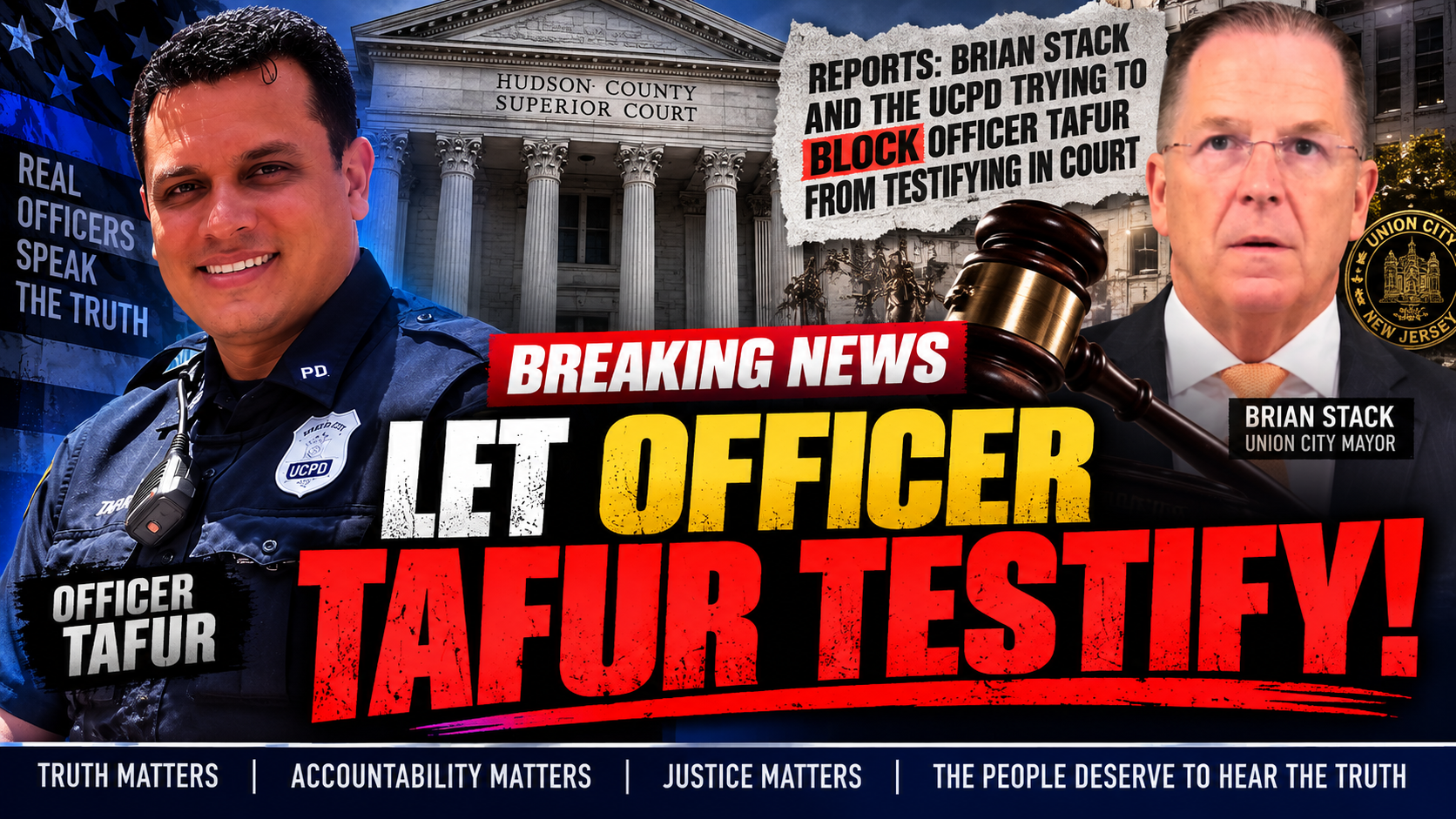
The Juan Estrella v. City of Union City trial has reached a critical moment. Union City and its attorneys are fighting to prevent Union City Police Officer David Tafur from giving testimony that could be extremely damaging to the City’s defense.
According to the City’s own court filing, Tafur is expected to testify that he “was present when Chief Luster made a derogatory comment about Dominicans.” Tafur is also expected to testify about differences between discipline imposed upon him and Juan Estrella.
This is a discrimination case. Juan Estrella alleges he was passed over for promotion because of his Dominican national origin. If an officer is prepared to testify under oath that a former police chief involved in this controversy made a derogatory statement about Dominicans, the jury deserves to hear him.
Why is the City fighting so hard to keep Tafur off the witness stand?
City attorney Philip Morrow is asking Judge Kalimah Ahmad to prevent Tafur from giving this testimony. The defense argues that the alleged statement was not disclosed during discovery and characterizes Tafur as effectively a “surprise witness” concerning that statement.
But why should the answer be to silence the witness?
Put Tafur on the stand. Let him take an oath. Let him explain exactly what he heard, when he heard it, where it happened, and who was present.
Then cross-examine him.
Let Nichelle Luster respond.
And most importantly, let the jury decide who is telling the truth.
Instead, Union City is asking the judge to make sure the jury never hears this testimony in the first place.
That should trouble the public.
Then comes the threat of discipline
The City’s own filing attacks Tafur personally and tells the court about his disciplinary history and an Attorney General investigation. Most strikingly, the City’s attorneys tell the judge that Tafur “faces the possibility of a severe disciplinary sanction.”
The timing and appearance are disturbing.
Here is a current Union City police officer prepared to give testimony potentially harmful to Union City’s defense—and the City’s attorneys are simultaneously reminding the court that this employee could face severe discipline.
According to insiders who have spoken with Tafur, City attorneys also attempted to contact him and tell him that he was personally being represented by the City’s attorneys. Tafur rejected that representation and reportedly viewed those attempts as intimidation.
There are now serious concerns that the City administration and Union City Police Department, including through Chief Walter Laurencio, could use additional disciplinary proceedings against Tafur in retaliation for his willingness to testify.
If government discipline is being used—or threatened—to pressure a witness because of testimony that could damage the government in court, that would be outrageous.
The City’s own argument shows why Tafur matters
Union City itself acknowledges that the ultimate issue remaining for trial is whether Estrella was denied promotion because of his Dominican national origin.
The defense also acknowledges that Estrella’s disciplinary history is at the center of its explanation for why he was bypassed and that the issue includes whether that stated reason was actually a pretext for discrimination.
So imagine being a juror.
You are being asked to determine whether national-origin discrimination played a role in a promotional decision, while an active police officer is allegedly prepared to testify that the former chief made a derogatory statement about the very national-origin group at issue.
Why shouldn’t that jury hear what Tafur has to say?
The City’s attorneys can attack his credibility in front of the jury. That is what cross-examination is for.
This is exactly why the public is losing confidence
The optics could hardly be worse.
The City wants potentially damaging testimony excluded. Its attorney attacks the witness’s credibility before he testifies. The City’s filing raises the possibility of severe discipline against that same officer. And now there are allegations of attempts to pressure or intimidate Tafur while he prepares to testify.
Enough.
Union City government and the Union City Police Department should not operate as though employees must choose between protecting their careers and telling the truth in a courtroom.
If Tafur is willing to testify under oath, let him testify.
If his testimony is false, expose it through evidence.
If it is true, the jury deserves to know.
The conduct of the City’s attorneys deserves scrutiny
We are also deeply disturbed by the allegations surrounding City attorney Philip Morrow’s handling of Tafur.
Attorneys are advocates, and aggressive advocacy is part of litigation. But there is a line between aggressively defending a client and improperly interfering with or intimidating a witness.
Anyone who possesses firsthand evidence of unethical conduct should consider submitting that evidence to the appropriate attorney-ethics authorities, the appropriate bar association and allowing them to determine whether professional rules were violated.
Nobody—attorney, police chief, mayor, or municipal government—should be above scrutiny.
Let the jury hear the evidence
Judge Kalimah Ahmad has an important evidentiary decision to make.
Our position is simple:
LET DAVID TAFUR TESTIFY.
Let the City’s lawyers question him.
Let the plaintiff’s lawyers question him.
Let Nichelle Luster defend herself against the allegation.
And then let twelve jurors decide what happened.
We believe the evidence presented by Juan Estrella deserves to reach the jury, and we are confident that when the jury is allowed to hear the complete story, it will ultimately side with the plaintiff.
Union City should stop trying to control what the jury gets to hear and start answering the evidence.
LET TAFUR TESTIFY.
Discover more from Hudson County Truth
Subscribe to get the latest posts sent to your email.


JEFA DE LA POLICIA DE UNION CITY DICE “LOS DOMINICANOS SON ANIMALES”

UNION CITY POLICE CHIEF SAID “DOMINICANS ARE ANIMALS”

LET OFFICER TAFUR TESTIFY — WHAT IS UNION CITY SO AFRAID OF?

Jimmy Davis Can’t Run From the Truth: The People Deserve to Know Who He Really Is

A Closer Look at Jamie Chebra: Former Jersey City EMS Leader’s Past and Present Under Scrutiny

BREAKING: Scandal Erupts Inside Hudson County Sheriff’s Office — Lt. Fedrow Found Guilty of Sexual Misconduct, County Officials Accused of Political Protection

-
 Breaking News12 months ago
Jimmy Davis Can’t Run From the Truth: The People Deserve to Know Who He Really Is
-
 Breaking News1 year ago
A Closer Look at Jamie Chebra: Former Jersey City EMS Leader’s Past and Present Under Scrutiny
-
 Breaking News11 months ago
BREAKING: Scandal Erupts Inside Hudson County Sheriff’s Office — Lt. Fedrow Found Guilty of Sexual Misconduct, County Officials Accused of Political Protection
-
 Breaking News2 years ago
UNION CITY POLICE OFFICER FERNANDO MURO IS FAMOUS!
-
 Breaking News2 years ago
A History Lesson of Corruption in Union City
-
 Breaking News2 years ago
🔥🚔 BREAKING: UNION CITY POLICE CHIEF ANTHONY FACCHINI IS A DISGRACE! OFFICERS WANT HIM GONE IMMEDIATELY! 🚔🔥
-
 Breaking News2 years ago
Republican Assembly Candidate Condemns Brian Stack Letter, Calls for Term Limits
-

 Breaking News1 year ago
📰 BREAKING: Barbara Pinzon Ousted in Union City Teachers Union Shake-Up – Juana Dominguez and Daniel Prusko Elected in Historic Shift Towards Transparency and Reform